25 Years of Research
5 National Studies
1 Final Analysis
A Report on Youth and Young Adult
Ministry Leadership
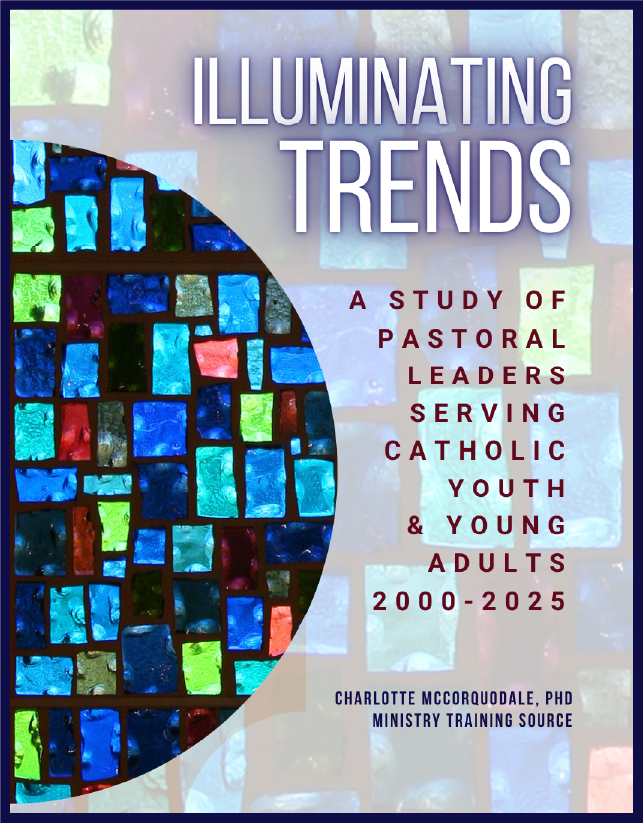

What is this report?
A 25-year longitudinal study traces who leads the Catholic Church’s ministry with youth and young adults and how this largely lay, paid-and-volunteer workforce has been formed, resourced, compensated, and sustained over five studies (2000–2024).
What were some of the findings on Ministry Today?
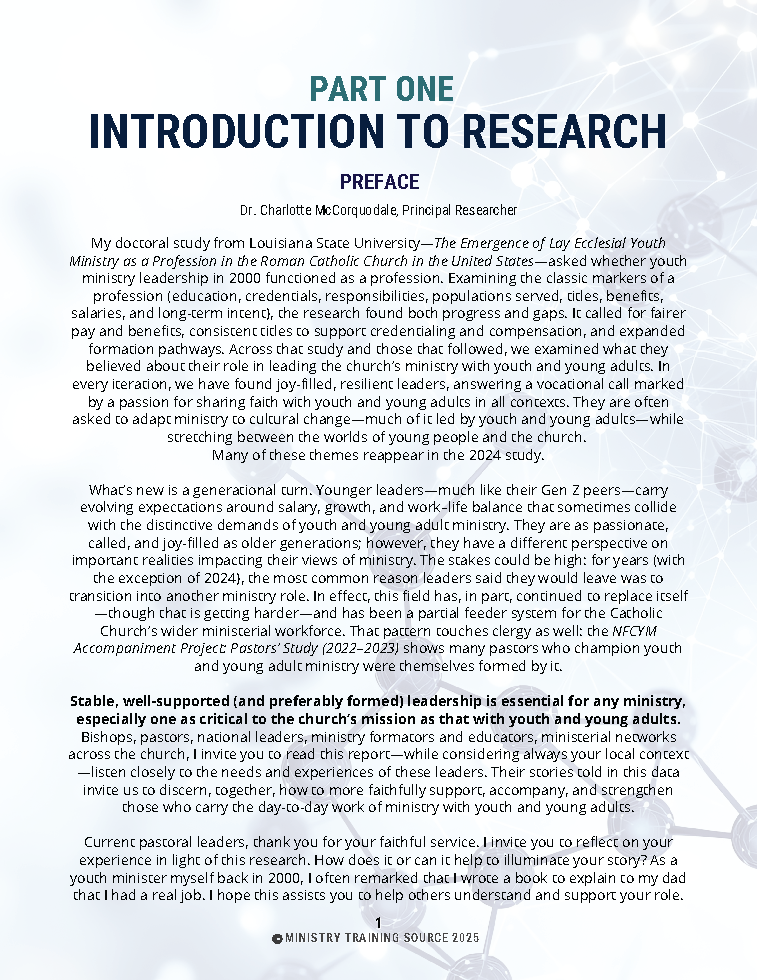
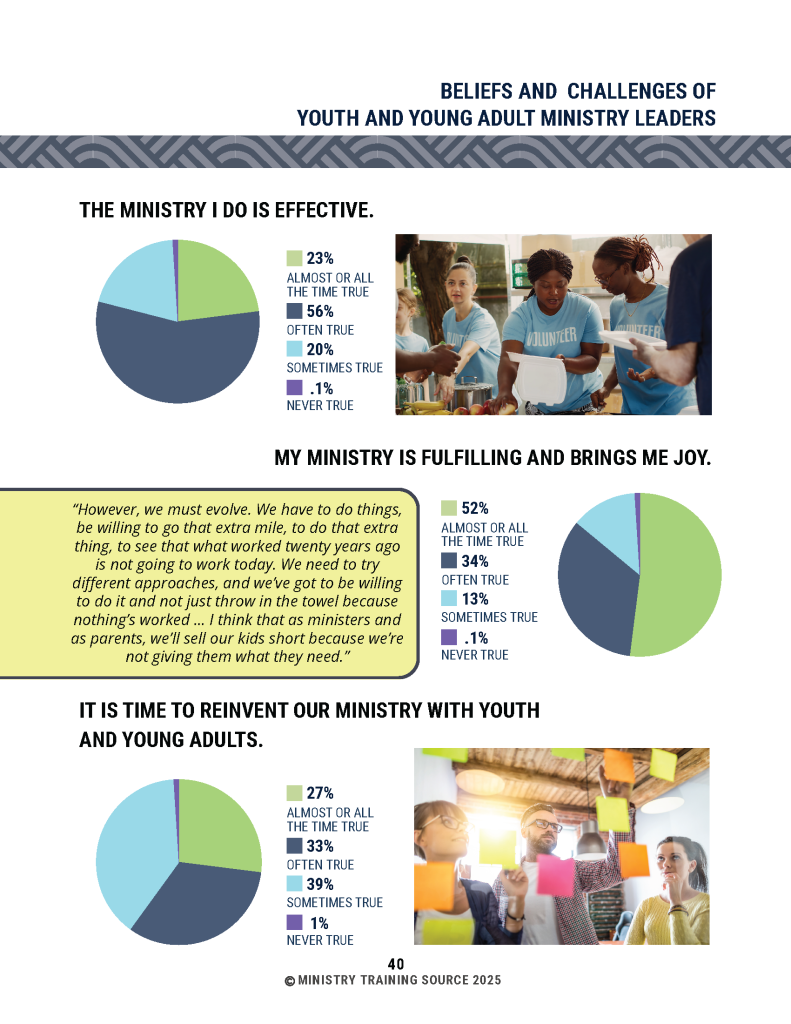
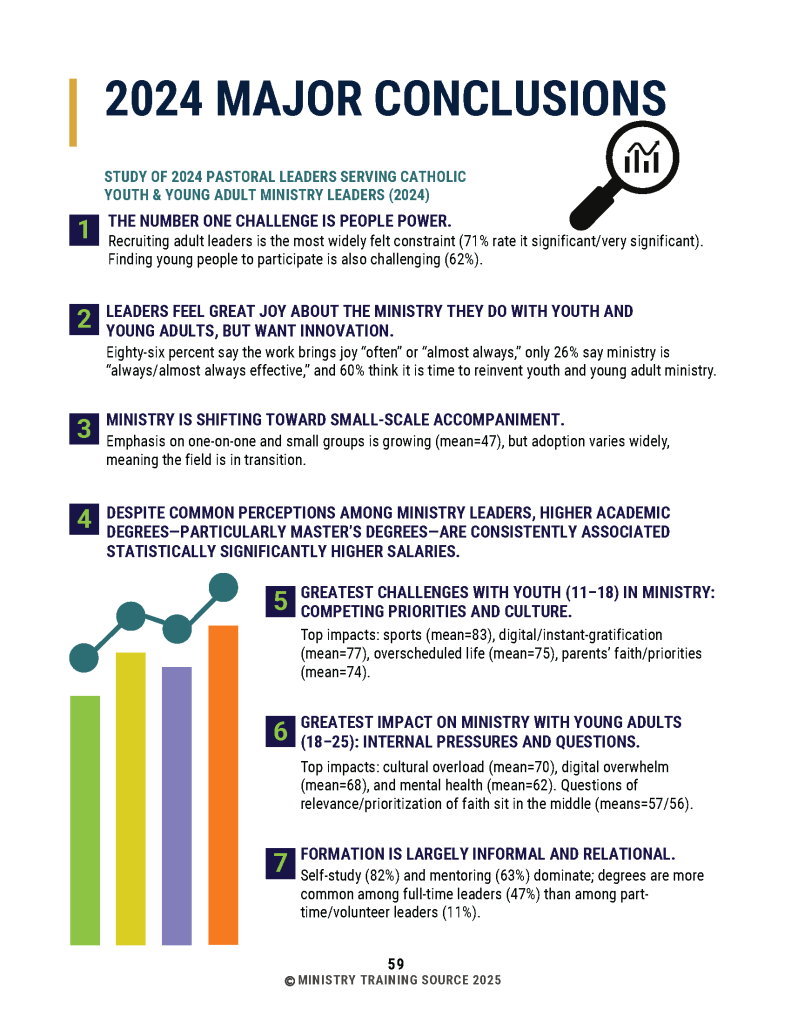
Across the period, sustaining both the leaders and the ministry has grown more difficult. Ministry is shifting toward small-scale, accompaniment-based, discipleship-focused approaches, with growing agreement that impact should be judged by depth of transformation rather than head counts.
What has been the impact on Leadership?
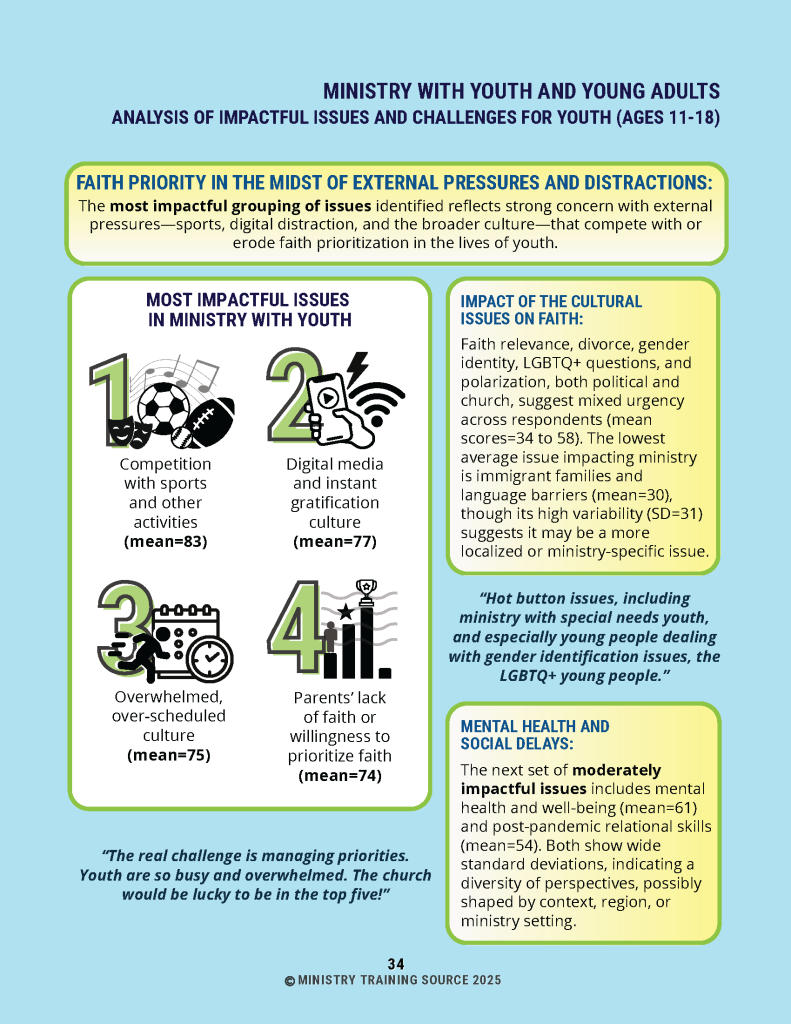
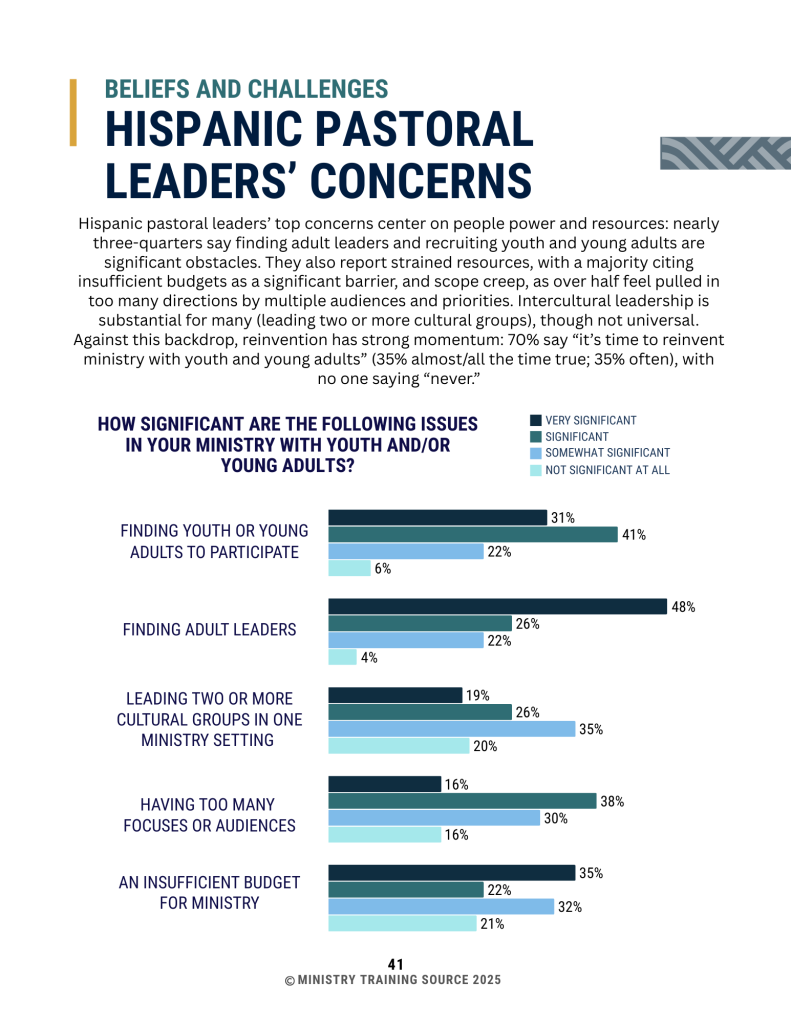
Formation is still seen as essential but has become less formal and less supported at the (arch)diocesan level. At the same time, “role creep” has expanded portfolios (youth, young adults, sacramental prep, and various parish-wide functions) without matching pay or training, squeezing out time for relational ministry. Recruiting adult mentors and engaging young people remains a chronic constraint and challenge. Pastor–minister partnership continues to be the decisive factor on the outcomes of ministry.
What concerns are there from the conclusions of this research?
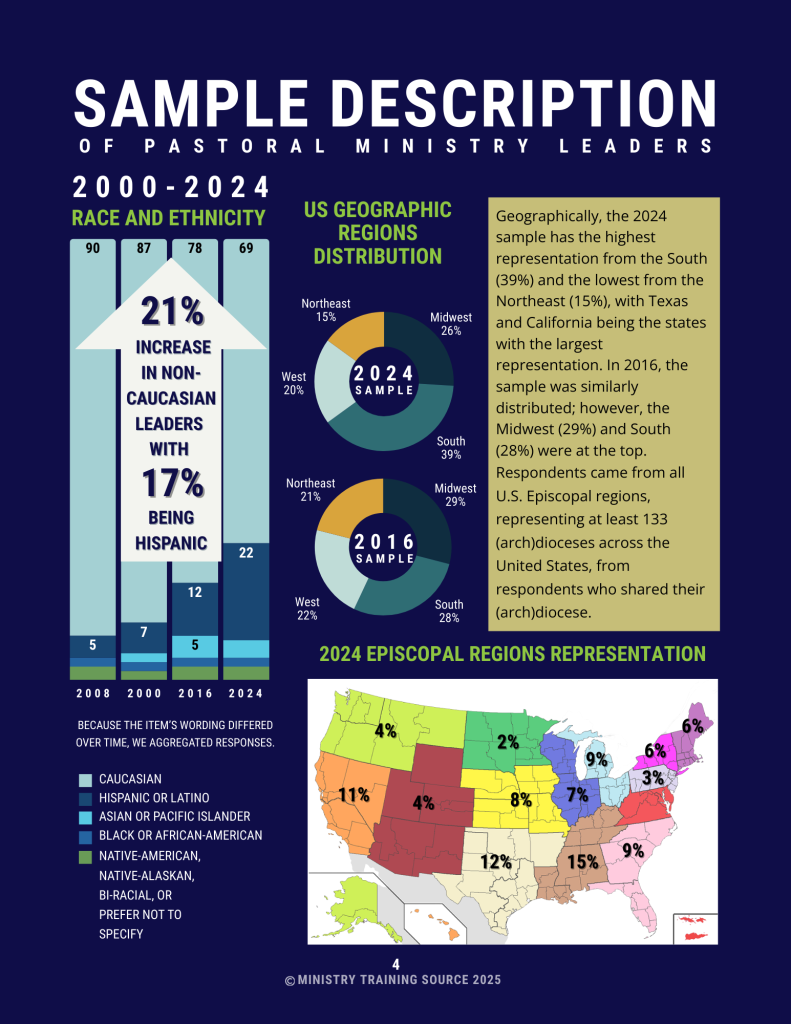
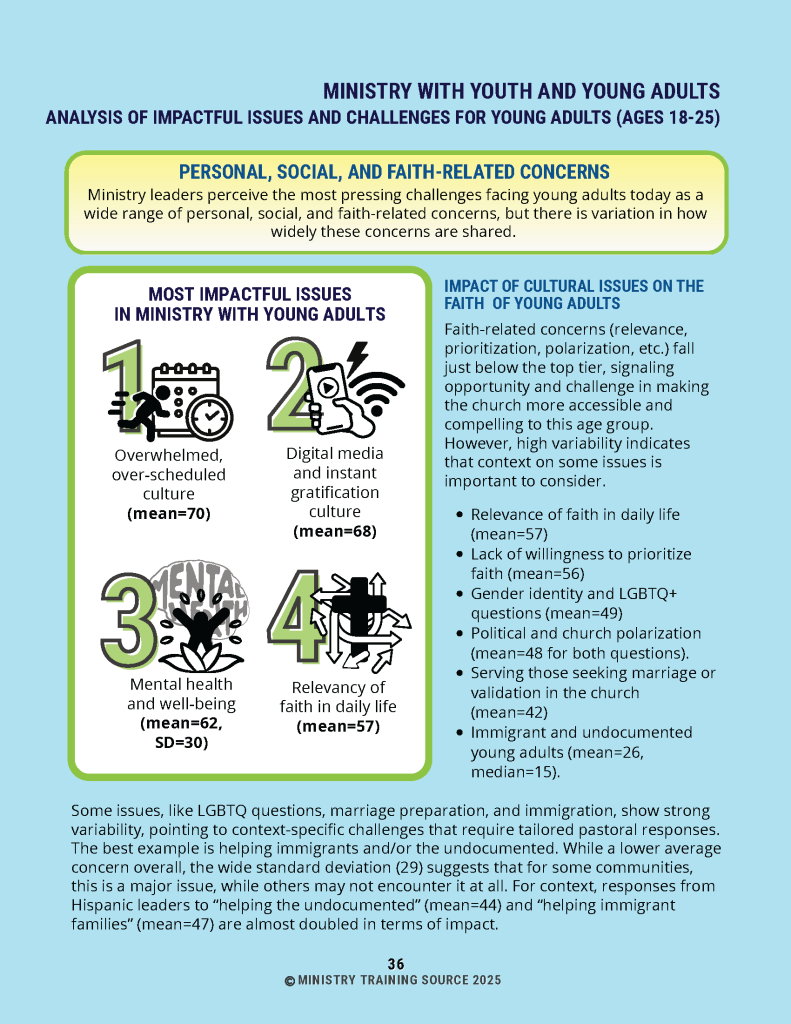
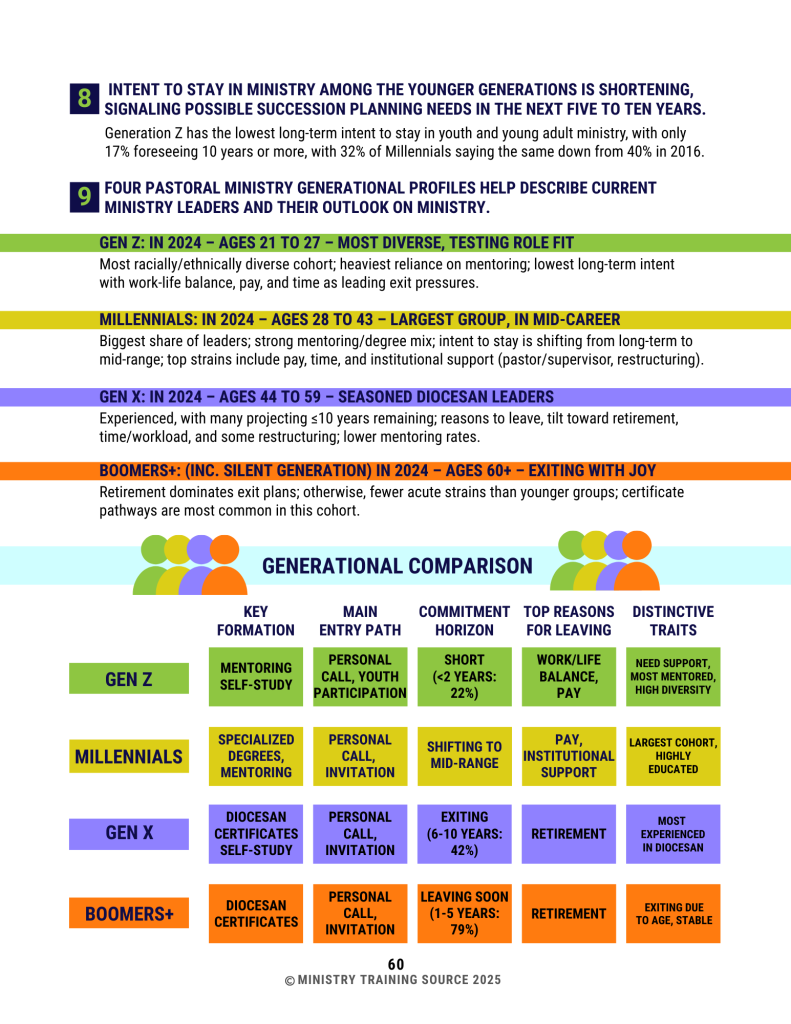
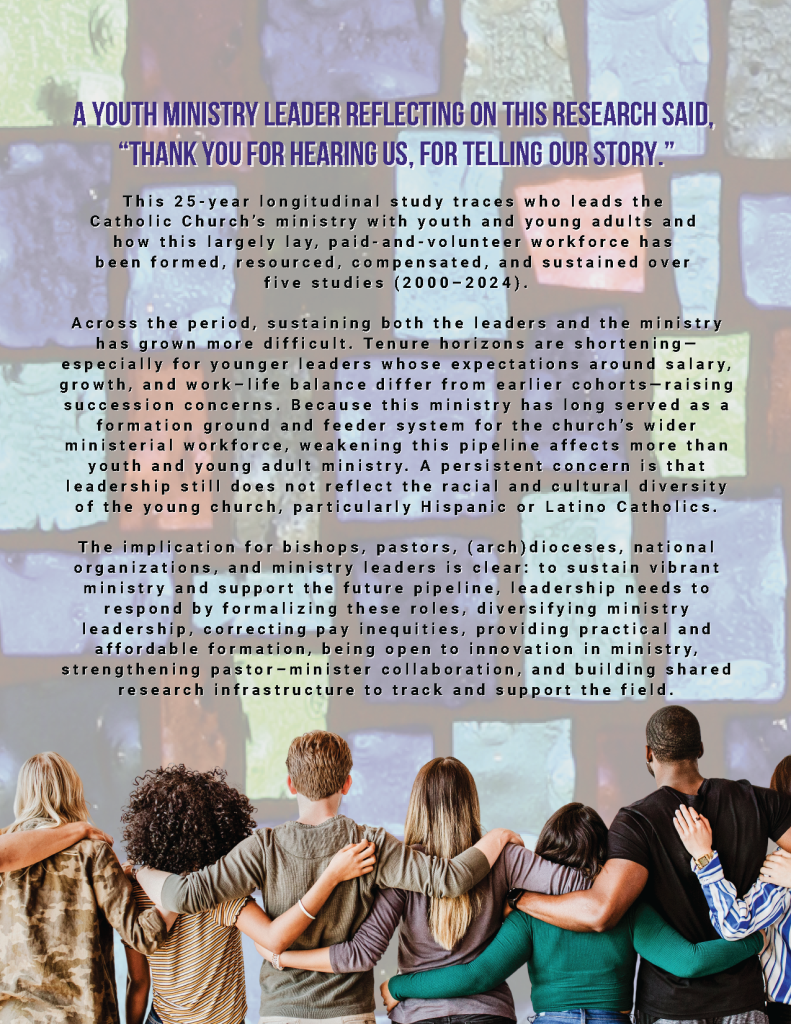
Tenure horizons are shortening—especially for younger leaders whose expectations around salary, growth, and work–life balance differ from earlier cohorts—raising succession concerns. Because this ministry has long served as a formation ground and feeder system for the church’s wider ministerial workforce, weakening this pipeline affects more than youth and young adult ministry. A persistent concern is that leadership still does not reflect the racial and cultural diversity of the young church, particularly Hispanic and Latino Catholics.
All of this is great, but what does it mean going forward?
The implication for bishops, pastors, (arch)dioceses, national organizations, and ministry leaders is clear: to sustain vibrant ministry and support the future pipeline, leadership needs to respond by formalizing these roles, diversifying ministry leadership, correcting pay inequities, providing practical and affordable formation, being open to innovation in ministry, strengthening pastor–minister collaboration, and building shared research infrastructure to track and support the field.
Review a few sample pages!